Reach down toward your toes and notice where your hands stop moving. Most people who stretch on their own find that spot sitting about where it sat six months ago. More repetitions of the same routine haven't shifted it, and that's a common place to get stuck. Flexibility work stalls for reasons that have little to do with how hard you try. I'm Geri León, a massage therapist based in Castro Valley, and I work Thai massage with clients from San Leandro. The difference in this work comes down to who holds your position while you lengthen.
Clothing, a Mat, and Movement
Thai massage happens on a padded floor mat with you fully dressed in comfortable clothes. No oil goes on you, since this work moves your body rather than traveling across your skin. I guide your limbs through supported positions while you breathe and stay involved throughout. Being moved by someone else feels unfamiliar at first, and you can tell me to stop or ease off at any point. Loose clothing with enough give for your knees and hips to bend fully works best. Most people settle into the rhythm within the first several minutes on the mat.
Who Holds the Position
When you stretch on your own, your body has to do two jobs at the same moment. Some muscles have to hold you steady in the position while others lengthen. In a supported stretch I take over the holding, so the muscles that would be bracing are free to do nothing. That's why the same position travels further with a second person than it does on your own bedroom floor. Nothing is being asked of those muscles except to lengthen. The difference shows up in the first session rather than after weeks of practice. Your job on the mat is to breathe and let each position happen.
Where Desk Weeks and Training Weeks Leave You
Sitting for long hours keeps the hip flexors short while the hamstrings stay loaded in one fixed position. People who train hard develop a different pattern, where strength gains outpace the flexibility work meant to keep up with them. Runners often arrive tight through the calves and the backs of the legs. Anyone lifting regularly tends to need more time through the chest and the front of the shoulders. I bring the hips into supported positions that open the front and the back of them. Shoulders and the upper back get similar attention on people who spend their days over a keyboard.
Rhythm and Pressure Along the Body
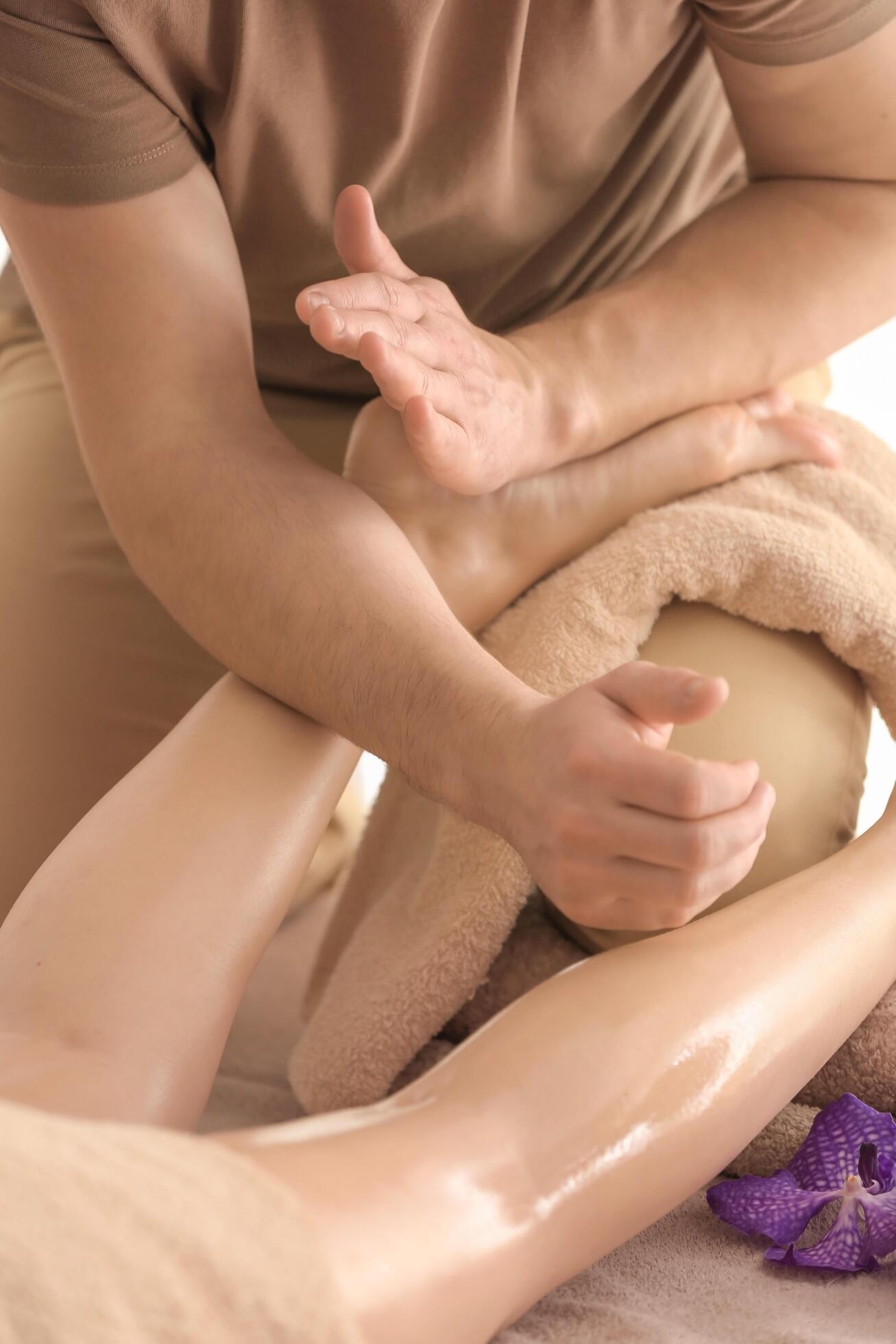
Thai work uses broad rhythmic compression rather than the kneading you'd get on a table. I use my palms and my forearms along with the weight of my body, rocking gently between positions. That rocking keeps you from tensing against the pressure the way you might on a table. Nothing about the pace asks you to hold a position longer than feels right to you. The tradition maps lines across the body, and I hold that as a concept shaping how I move rather than as a medical claim. Many people describe the pace as calm even while their body is working.
One Session and a Standing Appointment
A first session shows you where your range opens and how your body responds to being moved. Repeat sessions build on that, because your body arrives already familiar with the positions. Familiar positions let us spend less time introducing them and more time inside them. Stiffness creeping back between visits is normal and worth mentioning when you come in. Keeping some easy movement in the days that follow helps hold what the session opened up. Walking counts, and so does anything gentle that takes your hips and shoulders through their range.
Come Find Out Where Your Range Opens
Call me, Geri León, at (510) 409-8598 and tell me where your stretching stopped paying off. We can talk through whether mat work suits your body and your history before you book a session. Bring comfortable clothes you can move in freely, since nothing comes off for this work. Let me know about joint conditions or recent injuries when we talk, since those change how I work. My practice is in Castro Valley, a short drive from San Leandro, and first-timers are welcome to ask questions on the phone.